

Twenty-five kilometers north of Puerto Natales, past Laguna Sofia and out of sight from the main road to Torres del Paine, there is a wall of sedimentary conglomerate that most travelers drive past without knowing it...
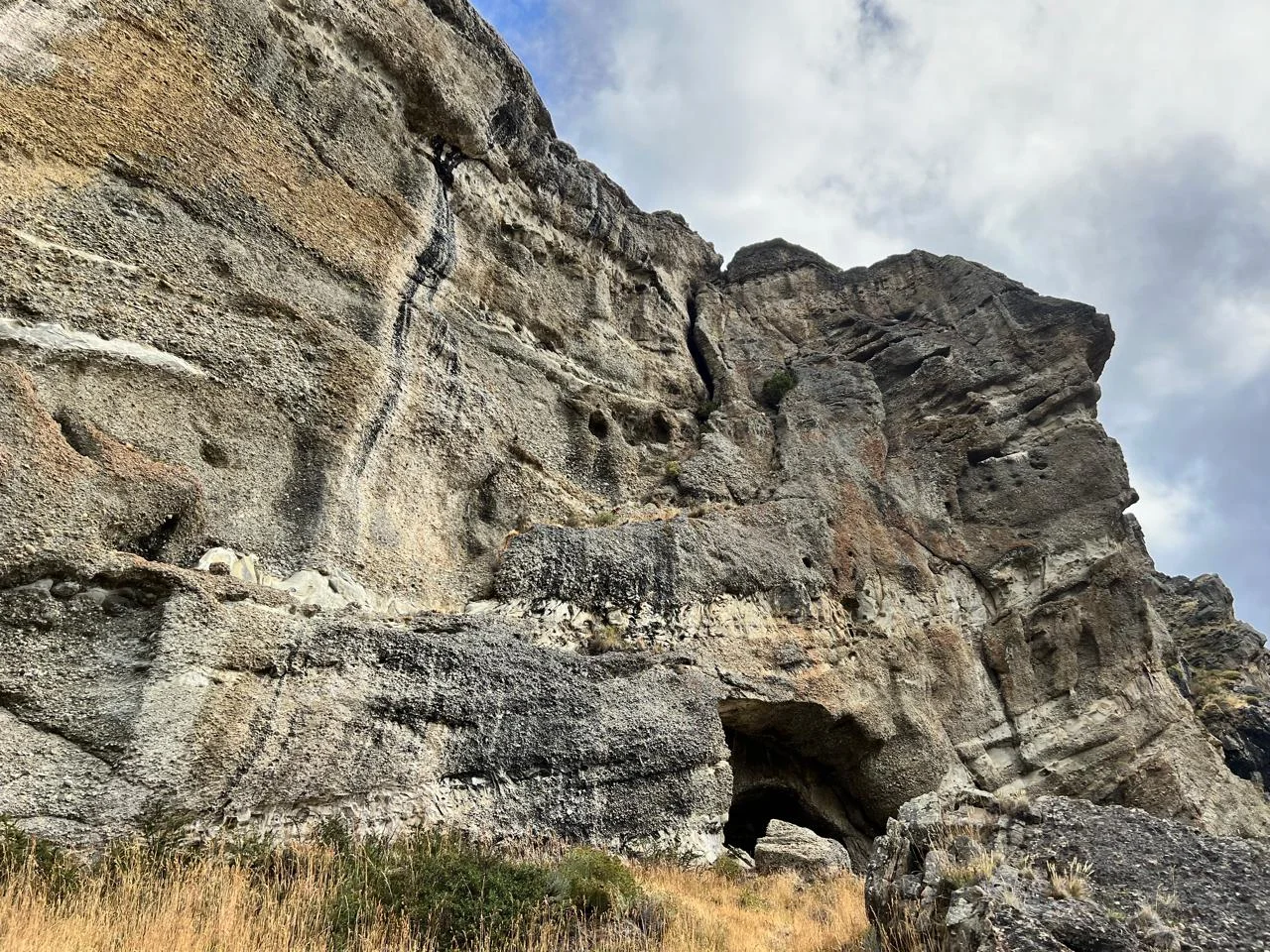
Crag at Laguna Sofía
Twenty-five kilometers north of Puerto Natales, past Laguna Sofia and out of sight from the main road to Torres del Paine, there is a wall of sedimentary conglomerate that most travelers drive past without knowing it exists.
Cerro Benitez is one of the best sport climbing destinations in Chilean Patagonia. It has over 100 bolted routes on solid conglomerate rock, grades that run from 5.6 to 5.13+ on the American scale, single-pitch lines between 8 and 30 meters, and a multipitch sector for those who want to commit to a full day on the wall. It sits next to Laguna Sofia in a natural amphitheater of Patagonian steppe and lenga beech, with views of the glaciated Prat mountain range across the water and Andean condors working the thermals overhead.
It is also the best place to go climbing in Patagonia if you are not already a technical climber, because the grade range is wide enough to give a complete beginner a genuine day on real rock while also challenging experienced sport climbers on hard projects.
At Chile Adventure Guides, we connect climbers of all levels directly with the certified local guides who operate at Cerro Benitez year-round. This is everything you need to know before you go.
1. Where Cerro Benitez Is and Why It Matters
Cerro Benitez sits within the Laguna Sofia valley, approximately 25 kilometers north of Puerto Natales along the road toward Torres del Paine. The drive from central Puerto Natales takes about 30 minutes. The climbing area is located on private land, inside the Estancia Ernesto Helmer, which is also a paleontological and archaeological site containing cave paintings estimated to be approximately 3,500 years old.
The context matters for two reasons. First, access to the climbing sectors requires permission from the landowner, which is coordinated through registered local operators and guides. The climbing community in Puerto Natales has worked to maintain a good relationship with the estancia owners, and independent climbers who show up unannounced without prior notification risk jeopardizing that access for everyone. Second, the setting of the climb, next to a pristine Patagonian lagoon inside a working estancia with ancient rock art in the surrounding hills, is genuinely different from climbing at a commercial sport crag with a car park and a cafe.
The approach from the parking area to the base of the main sectors is a short walk of approximately 20 minutes. The terrain is open steppe with some lenga beech along the lower trail.
2. The Rock: Sedimentary Conglomerate in Patagonia
Cerro Benitez is a sedimentary conglomerate crag, which gives it a specific character that climbers with experience on granite or limestone will notice immediately.
Conglomerate rock is formed from rounded pebbles and cobbles cemented together in a matrix of finer material. The result is a textured surface with a mix of positive holds, edges on embedded pebbles, and sloper sections where the matrix is more prominent. It is a forgiving rock type for beginners because holds are generally well-defined and the texture provides friction across a wide range of body positions. For experienced climbers, the variety of hold types on harder routes demands technical footwork and body positioning rather than pure arm strength.
The rock quality at Cerro Benitez is solid and well-maintained by the local climbing community. Routes are fully bolted with fixed anchors at the top of each line. The guide places all protection and sets up the rope for top-rope climbing on half-day and full-day sport tours, so participants do not need to know how to lead climb to access the full grade range.
The single-pitch routes range from 8 to 30 meters in height. The taller lines on the upper tier of the crag are among the most sustained and visually impressive in the area, with views over Laguna Sofia from mid-height that make the exposure worthwhile on any grade.
3. The Routes: What to Expect at Each Level
The grade range at Cerro Benitez runs from 5.6 to 5.13+ on the Yosemite Decimal System. In practice, this covers every level from a person who has never put on a harness to an advanced sport climber working near their physical limit.
Beginner routes (5.6 to 5.9): The lower-grade lines at Cerro Benitez are genuinely accessible to first-time climbers. Holds are large and well-spaced, the angle is moderate, and the moves reward basic technique over physical strength. Some operators have reported minimum ages as low as 5 years old for the easiest lines, which reflects how approachable the lower grades are when properly guided and top-roped. That said, the terrain is not a climbing gym wall: the rock is irregular, the footing at the base requires attention, and Patagonian weather conditions can change the feel of the climb significantly.
Intermediate routes (5.10 to 5.11): The mid-grade lines are where most adult recreational climbers spend the bulk of their day at Cerro Benitez. These routes introduce technical footwork, sustained sequences, and the need to read the rock ahead rather than simply reaching for the next obvious hold. Several 5.10 and 5.11 lines on the main walls are cited by local guides as particularly good for developing technique on conglomerate.
Advanced routes (5.12 to 5.13+): The upper-end routes at Cerro Benitez are genuine sport climbing projects. The 5.13+ lines require a high level of fitness, strong technique on conglomerate specifically, and the ability to work a route over multiple attempts. Experienced climbers who visit Puerto Natales as a base for Torres del Paine often use these lines to stay sharp during rest days between bigger objectives.
On a typical guided half-day or full-day session, the group works through several routes in ascending order of difficulty, starting on easier lines to warm up, building familiarity with the rock type, and then attempting harder terrain as the session progresses.
4. The Multipitch Sector
Beyond the single-pitch sport climbing area, Cerro Benitez has a dedicated multipitch sector that makes it a full-day objective for experienced climbers.
The Chile Adventure Guides full-day multipitch listing runs from 9 AM to 3 PM and includes a 20-minute approach hike from the pickup point to the base of the multipitch wall. The route finishes at the summit of the sector, where views extend over Laguna Sofia and the surrounding Patagonian landscape. Descent is on foot rather than rappel, which gives climbers a chance to see the area from above before returning to the base.
The guide ratio for the multipitch experience is one guide per two participants, which reflects the more complex rope management and communication demands of a multi-pitch route compared to a single-pitch top-rope session. Personal gear is required for the multipitch, specifically helmet, harness, and climbing shoes, with rentals available through the guide.
For climbers using Cerro Benitez as preparation or acclimatization before attempting routes in Torres del Paine or other bigger objectives in the region, the multipitch sector provides the most relevant experience. Moving efficiently between pitches, managing rope in Patagonian wind, and reading complex rock over sustained vertical distance are all skills that directly transfer to bigger objectives nearby.
5. What a Guided Day at Cerro Benitez Looks Like
A half-day session and a full-day session at Cerro Benitez follow different rhythms but share the same structure.
Pickup and transfer. Guides collect participants from their accommodation in Puerto Natales. The drive to Laguna Sofia takes approximately 30 minutes.
Approach. A short walk from the vehicle to the base of the climbing sector. The path crosses open steppe with views of the lagoon and, depending on the time of year, condors visible on the thermals above the crag.
Briefing and equipment fitting. The guide goes over the basics: how the harness works, how the rope system works, the commands used between climber and belayer, and what to expect on the first route. Full equipment is provided including harness, helmet, climbing shoes, rope, carabiners, and chalk.
Climbing session. The group starts on the easiest appropriate routes and works upward in difficulty through the session. The guide remains at the anchor managing the rope while participants climb and rest alternately. The pace adapts to the group: a beginner group spends more time on easier terrain, building confidence and technique before attempting harder lines. An experienced group moves through warm-up routes quickly and spends more time on harder terrain.
Snack break. A mid-session break with snacks and hot drinks is included in most guided offerings. In Patagonia, maintaining energy and warmth during a climbing session is not optional, and experienced guides build this into the rhythm of the day.
Return to Puerto Natales. The session ends with a short walk back to the vehicle and the drive to town. Total time from pickup to dropoff is approximately five to six hours for a half-day session.
6. Wildlife at Laguna Sofia
Cerro Benitez is not only a climbing destination. The setting next to Laguna Sofia places climbers in one of the better wildlife observation zones near Puerto Natales.
Andean condors are the most consistent wildlife presence at the crag. The updrafts created by the rock walls attract condors for thermal soaring, and it is common to see them at close range while climbing. The condor's wingspan reaches 3.2 meters, and seeing one soar past at eye level from mid-height on a climbing route is a Patagonian experience that has nothing to do with the climbing itself.
Guanacos are common in the surrounding steppe and are often visible from the approach trail and from the base of the crag. The lagoon supports birdlife including flamingos at certain times of year. The estancia's archaeological significance means that visitors with an interest in the pre-Columbian history of the region can ask their guide about the cave paintings in the surrounding hillsides, which date back approximately 3,500 years.
7. Logistics: Getting There, Access Rules, and Seasons
Getting there. Cerro Benitez is accessible only by private vehicle or organized transfer. There is no public bus service to Laguna Sofia. All guided experiences booked through Chile Adventure Guides include round-trip transportation from Puerto Natales.
Access rules. The climbing area is on private land. Independent climbers who want to access the crag must contact the landowner in advance by email, providing the date of visit, the specific sector they plan to climb, the number of people in the group, full names of all participants, and an emergency contact. The email for access requests is reported by the local climbing community as the required channel. The rules are clear: no pets, no approaching wildlife, no open fires, no camping inside the property, no motorized vehicles inside the property, and no crossing fences without authorization.
For climbers booking through Chile Adventure Guides, access coordination is handled by the local guide as part of the experience.
Season. Rock climbing at Cerro Benitez runs year-round. Some operators list September to April as their primary season, reflecting the more reliable weather window, but the crag sees activity in all months. Patagonian weather at Laguna Sofia can include strong wind, rain, and cold temperatures at any time of year. Extreme rainfall, snow, or strong winds are the conditions under which guided sessions are suspended and rescheduled. The cancellation policy for weather-related cancellations is 48 hours in advance for standard rescheduling.
8. What to Wear and Bring
The guide provides all technical climbing equipment: harness, helmet, climbing shoes, rope, carabiners, and chalk. Participants are responsible for personal clothing and a few specific items.
Clothing. The layering system is essential at Laguna Sofia regardless of the season. A moisture-wicking base layer, a mid-layer fleece or softshell, and a waterproof outer shell should be brought to every session. Even in summer, temperatures at the crag can drop quickly if cloud moves in, and waiting at the base of a route in wet or windy conditions demands more insulation than most visitors expect. Trekking shoes or sturdy sneakers are appropriate for the approach and base area. Climbing shoes are provided.
Additional items to bring:
Water bottle, minimum one liter
Sunglasses
Sunscreen, SPF 50 or above
Warm hat and gloves
Small backpack for personal items
What not to bring: The access rules prohibit pets inside the property.
9. Who Is This For?
Cerro Benitez works as a climbing destination for a broader range of people than most sport crags.
Complete beginners who have never climbed outdoors get their first real rock experience on routes that are bolted, top-roped by the guide, and graded appropriately for first-timers. The guide handles all technical decisions; participants simply climb. The minimum age on most guided offerings is 14, though some operators work with younger children on the easiest lines.
Recreational climbers with gym experience but limited outdoor background find Cerro Benitez a useful bridge between indoor and outdoor climbing. The conglomerate rock teaches foot placement and body positioning in a way that plastic holds do not, and the graded outdoor environment provides a more honest assessment of current ability than gym climbing typically does.
Experienced sport climbers using Puerto Natales as a base for Torres del Paine or bigger objectives find the upper-grade lines at Cerro Benitez genuinely challenging. The 5.12 and 5.13 routes are legitimate hard sport climbing, not warm-up territory, and the multipitch sector provides technical terrain relevant to larger objectives nearby.
Travelers on rest days between bigger objectives, whether from the W Trek, a puma tracking tour, or a more serious mountaineering expedition, often use Cerro Benitez as an active rest day that keeps them moving without the physical demands of a full trekking or climbing day.
The maximum weight limit reported by local operators is 100 kg. Pregnant women are excluded from the activity. These are standard safety parameters for top-rope and lead climbing with a single-point harness system.
10. Cerro Benitez as Preparation for Torres del Paine Climbing
Puerto Natales sits two hours from Torres del Paine, and the park contains some of the most serious big-wall climbing objectives in the world. The granite towers of Torres del Paine, particularly the North Tower, Central Tower, and South Tower, have routes that draw elite climbers from every continent and represent multi-day commitments at the extreme end of technical difficulty.
Cerro Benitez is not a direct technical preparation for these objectives; the rock type, scale, and commitment level are entirely different. What it does provide is a calibration point for climbers who are early in their development and want to understand their current level before committing to bigger objectives, and a place to practice rope management and communication systems in Patagonian wind conditions that are far more representative of what the park actually feels like than a calm indoor climbing wall.
For climbers planning any kind of technical objective in the Torres del Paine range, the certified guides listed on Chile Adventure Guides include specialists in big-wall and alpine climbing who lead multi-day expeditions to the more accessible peaks in the range. A day at Cerro Benitez with the same guide who will lead your bigger objective is also a useful opportunity to establish communication, assess climbing chemistry, and adjust the technical plan before committing to days on a bigger wall.
11. Book a Guided Climbing Day with Chile Adventure Guides
Chile Adventure Guides connects you directly with the certified local guides who operate at Cerro Benitez. Every guide on the platform is SERNATUR-certified, independently reviewed by past guests, and responds to inquiries within 24 hours. You confirm directly with the guide, no foreign agency markup, no intermediary taking margin out of the local economy.
View the full Cerro Benitez climbing listing and send your inquiry
No payment required to inquire.
View the Full Day Multipitch Rock Climbing at Cerro Benitez
12. FAQ: Rock Climbing at Cerro Benitez
Do I need climbing experience to go to Cerro Benitez?
No. The guided sessions are specifically designed to work for complete beginners, with the guide handling all technical aspects of the rope system. Participants only need to be physically capable of the climbing itself, which at the easiest grades is accessible to most fit adults and older children.
What is the rock type at Cerro Benitez?
Sedimentary conglomerate. This is a textured rock formed from cemented pebbles and finer matrix material. It provides good friction and a variety of hold types, making it suitable for all grades from beginner to advanced.
How many routes are there at Cerro Benitez?
Over 100 bolted routes across all sectors, with grades ranging from 5.6 to 5.13+ on the American Yosemite Decimal System.
Can I go to Cerro Benitez independently without a guide?
Yes, but access must be arranged in advance with the landowner. The climbing area is on private property and independent visitors must contact the owner before entering. The local climbing community has established access protocols that should be respected. Booking through Chile Adventure Guides includes access coordination as part of the service.
What is the best time of year to climb at Cerro Benitez?
The crag is accessible year-round. The September to April window offers more reliable weather, but sessions run in all months. Weather in Patagonia is unpredictable in every season, and all guided sessions include a weather cancellation policy.
Is equipment provided?
Yes. All technical climbing gear is included in guided sessions: harness, helmet, climbing shoes, rope, carabiners, and chalk. Participants are responsible for personal clothing appropriate to Patagonian conditions.
How far is Cerro Benitez from Puerto Natales?
Approximately 25 kilometers, or about 30 minutes by vehicle. All guided experiences include round-trip transportation from Puerto Natales.


