

Torres del Paine is one of the world's great photography destinations. Here is everything you need to know before you go: locations, light, gear, and local tips
Torres del Paine Photography Guide: Locations, Light, Gear, and Expert Tips
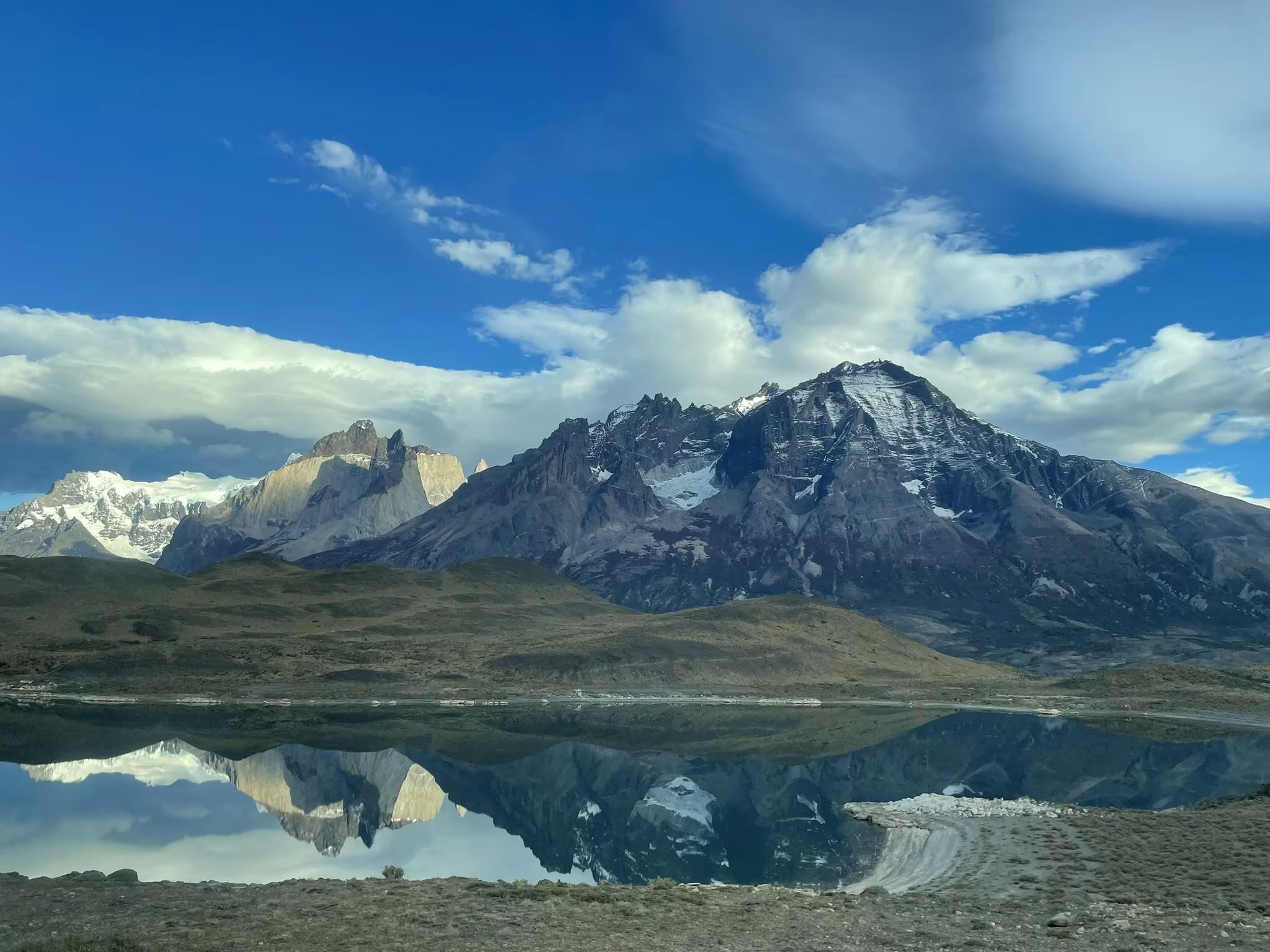
Cuernos and Almirante Nieto
Torres del Paine National Park covers 1,814 square kilometers of southern Chilean Patagonia and is widely considered one of the finest landscape and wildlife photography destinations on Earth. Granite towers, turquoise glacial lakes, a 28-kilometer glacier, the highest density of wild pumas on the planet, Andean condors, and light that shifts from fiery to silver to gold within a single hour make this a place where serious photographers return again and again and still feel they have not captured everything.
But Torres del Paine is also a place that punishes the unprepared. Wind gusts commonly exceed 100 kilometers per hour. Weather changes in minutes. The road speed limit inside the park is 40 kilometers per hour on dirt and gravel roads, meaning distances between locations take longer than you expect. There are no petrol stations inside the park. And the best photography moments happen at times and in places that only the people who live and work here know how to find reliably.
At Chile Adventure Guides, we connect photographers directly with the certified local guides who know this landscape best. This guide covers everything you need to plan a serious photography trip to Torres del Paine, from locations and light to gear, logistics, and why a local expert changes everything about the quality of what you come home with.
1. Why Torres del Paine Is a Photographer's Destination
The answer is not simply that the landscape is beautiful. Many places are beautiful. What makes Torres del Paine exceptional for photography is the density and variety of extraordinary subjects within a relatively compact geographic area, combined with light conditions and weather drama that are almost impossible to find at the same intensity anywhere else.
Within the same day, a photographer in Torres del Paine can shoot alpenglow on granite towers at sunrise, a puma moving across open steppe in morning light, flamingos on a turquoise lagoon at midday, the deep blue face of Grey Glacier in the afternoon, and a stormy sunset over Los Cuernos with lenticular clouds forming above the peaks. These are not all achievable on every day, but every one of them is achievable on the right day with the right local knowledge guiding your positioning and timing.
After seven years working as a nature photographer in Torres del Paine, one experienced park photographer noted that Chile's finest national park is as attractive for its mountains as it is for its incredible wildlife, and that not everything is about the famous granite towers that gave the park its name. That observation captures something important. Photographers who come only for the towers often miss the wildlife dimensions of the park entirely. Those who come for the wildlife sometimes neglect the extraordinary landscape opportunities. The best photography trips to Torres del Paine are structured to pursue both, and that requires local knowledge and planning that this guide will help you build.
2. Best Time of Year for Photography in Torres del Paine
This is the most important planning decision a photographer makes before visiting Torres del Paine, and the answer depends entirely on what you are trying to photograph.
Autumn: March to May
Autumn is widely regarded by experienced photographers and local guides as the finest overall season for photography in Torres del Paine. For reflections, autumn and winter offer significantly less wind than summer, when gusts can reach up to 150 kilometers per hour. Photographing the Torres del Paine mountain range reflected in Lago Pehoe or Laguna Amarga is a must for every landscape photographer, and calm water is essential for this.
For sunrises and sunsets, late March to May delivers the most intense color. While summer requires sacrificing most of the night to reach sunrise position by around 4:00 AM in late December, autumn sunrises occur at more manageable times, and the colors, often red and pink, tend to be more dramatic than summer equivalents.
Multiple local guides have noted that April is known for its calm conditions, and that there is usually a weather window of approximately seven to ten days when the sky is completely clear. The lenga beech trees turn gold and red through April, adding a color dimension to the landscape that summer does not offer. Crowd levels drop significantly after Easter, meaning popular viewpoints become accessible without competing with dozens of other photographers for position.
Summer: November to February
Summer offers up to 17 hours of daylight in December and is the best season for outdoor activity photography: hiking, kayaking, horseback riding, and all the dynamic human-in-landscape compositions that require extended daylight and cooperative subjects.
The trade-off is wind, crowds, and harsh midday light. The weather is more stable during the summer months from December to February, but the light is also harsh throughout summer, meaning quality shooting is largely limited to the hours around dawn and dusk. For landscape photographers specifically, this means a significant portion of each summer day is technically unsuitable for serious work.
Winter: June to August
Winter is underrated for photography and almost entirely ignored by mainstream travel advice. If wildlife is your main focus, visiting Patagonia in the off-season from May to September is recommended, as pumas are particularly active and more easily spotted when there are fewer tourists in the park. Fresh snow on the peaks creates compositions that summer cannot replicate, and the park's solitude means you can position yourself at any viewpoint without compromise.
The practical limitations are real: some park infrastructure closes, hours of daylight are short, and cold temperatures require preparation. But for the photographer who can work within those constraints, winter Torres del Paine is extraordinary.
3. Understanding Patagonian Light
Light in Torres del Paine does not behave the way it does in most photography destinations. Understanding its specific character is the foundation of planning successful shoots here.
Golden hour is extended and intense. At this latitude in summer, the sun rises and sets at angles that produce prolonged golden light rather than the brief window typical of equatorial or mid-latitude destinations. The granite of Las Torres and Los Cuernos catches and holds warm light in a way that makes alpenglow compositions possible over an extended window.
Storm light is its own genre. Patagonian weather in Torres del Paine has a personality all its own for photographers. Clear skies can give way to sudden showers, clouds sweep dramatically over the mountains, and rainbows often follow storms. The park is also famous for lenticular clouds, smooth lens-shaped formations created when strong winds meet the Andes. The moments immediately before and after weather fronts produce some of the most dramatic and unrepeatable light in the park. Constantly shifting clouds create fleeting moments of magical light, so be ready to shoot at all times and take advantage of these transient moments.
Cloudy days are not wasted days. For Grey Glacier specifically, a partly cloudy day produces the best shots. The soft, diffused light allows the details of the ice to stand out without overexposing the image. The same principle applies to close-up photography of glacial ice, forest detail, and wildlife portraits where harsh direct sunlight creates problems.
Blue hour deserves attention. Blue hour, the softer light that follows sunset, lends a cooler mood perfect for silhouettes or still waters. The long Patagonian twilight extends blue hour significantly compared to other latitudes, making it worth staying in position after the golden light fades.
4. The Best Photography Locations in Torres del Paine
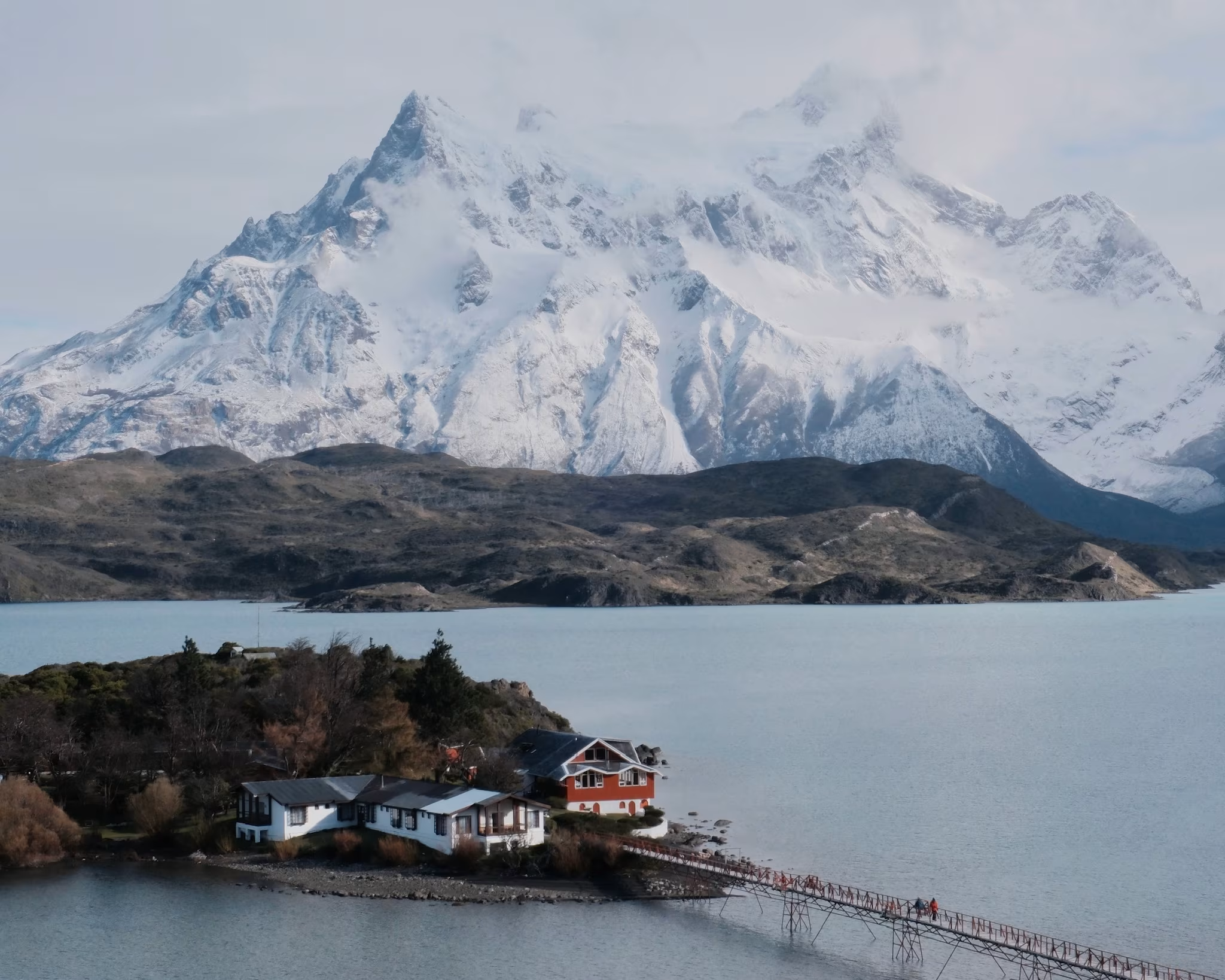
Mirador Pehoé
Mirador Base Torres
The iconic view of the three granite towers above a glacial lagoon is the image most associated with Torres del Paine worldwide, and no photography guide can omit it. Mirador Base Torres is the iconic view many hope to capture: a blood-red sunrise after a scramble from the refugio or campsite Chileno. Even without a sunrise, it is one of the high points of a park visit, looking over a silty blue-green lake in front of the soaring granite spires.
The hike is approximately eight hours round trip. Serious photographers often camp at Los Torres campsite to minimize the pre-dawn approach distance. Position matters enormously at this viewpoint: the rocks on the lake shore allow for foreground compositional variety that the main viewpoint path does not.
Lago Pehoe and Hosteria Pehoe
At the southern edge of Lago Pehoe is a small bay and hill next to one of the major hotels in Torres del Paine. This is one of the best views of the mountains in the park, with the lake spread out before the peaks, and it works in many different conditions and at various times of day.
On the eastern shore of Lago Pehoe is a small island with the Hosteria Pehoe hotel, which is a great place to explore with a camera. There are two options: climb up the hill past the hotel for a view of the lake, or get down by the shore for rocky foreground options. The variations in the water and the rocks allow for unique compositions as you adapt to conditions on location.
This location excels for Los Cuernos reflections on calm mornings. The best spots to capture Los Cuernos from Lago Pehoe include Camp Pehoe, Hosteria Pehoe, and the boardwalk behind Hotel Explora, all within easy walking distance of each other on the Y-150 road. Trying all three for both sunset and sunrise gives a slightly different perspective of these imposing granite peaks.
Grey Glacier
Grey Glacier, with a length of approximately 28 kilometers, is Torres del Paine's most iconic glacier and a dream for photographers from every angle, whether seen from viewpoints, by boat, or on foot. This fast-retreating glacier never looks the same and changes dramatically from day to day.
The best way to photograph the glacier is by boat during one of the daily navigations, a three-hour experience that allows close-up shots of the ice walls and views of the glacier's three faces. For photographers who cannot access the boat, Grey beach allows a short walk through the peninsula to shoot the many icebergs that come ashore, though it is far from the main glacier face.
Mirador Británico
Mirador Británico is an uphill hike along the W Trek. From Campamento Italiano the trail heads north through native vegetation including coigüe and lenga. When the forest opens at the mirador, hikers get 360-degree views including those of the two-toned massif rising above the forest of emerald-colored trees gnarled by years of wind exposure.
This is one of the most demanding photography locations to reach in the park but consistently produces compositions that lower viewpoints cannot replicate.
Mirador Lago Nordenskjöld
Mirador Lago Nordenskjöld is an accessible hike of approximately 3.8 miles with 472 feet of vertical gain. This lake is framed by the dramatic peaks of the Paine Massif and its vivid turquoise waters, a result of glacial melt, create an interesting contrast against the rugged mountain backdrop. This location is less crowded than the main Las Torres viewpoint and offers compositions that integrate lake foreground with the full Paine Massif.
Laguna Amarga
The road from Laguna Amarga to the Sarmiento entrance of Torres del Paine National Park is one of the best areas to see wildlife. The Laguna Azul area offers striking distant views of the Towers and is rich with birdlife and guanacos. For photographers, Laguna Amarga serves a dual purpose: the lake itself offers reflections of the Torres on calm mornings, and the surrounding steppe is the most productive zone in the park for puma sightings.
The Road to Lago Grey
One road leads to Lago Grey from the main north-south route through Torres del Paine, and it is one of the most photogenic journeys in the park. The road crosses an open plain with clear views of mountains across the fields, which are often full of horses, providing an ideal subject to join with the peaks. Building time into the journey to Lago Grey for shooting along this road consistently yields results.
5. Wildlife Photography in Torres del Paine
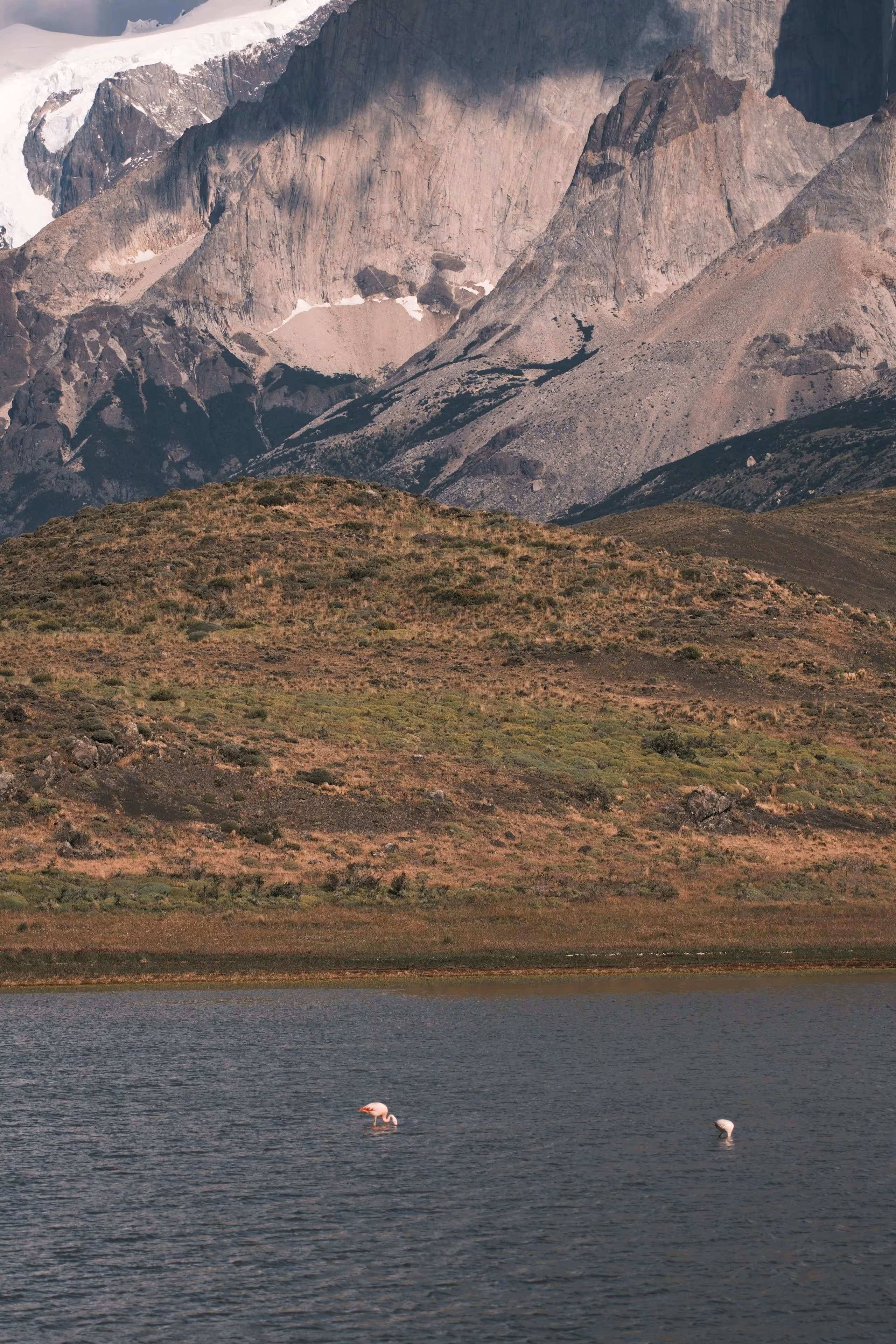
Flamingos in Laguna Amarga
Torres del Paine is not only a landscape photography destination. Its wildlife diversity makes it one of the finest wildlife photography locations in South America, and in the case of the puma, one of the finest in the world.
Puma Photography
For photographing pumas, condors, or Patagonian foxes, a focal length of around 400 to 600mm is recommended. The puma's habituation to vehicles in Torres del Paine means sightings at reasonable distances are achievable, but the cats move quickly and unpredictably. A telephoto zoom in this range gives you flexibility to reframe as the animal moves.
The productive puma zones are concentrated in the eastern sector of the park, particularly around Laguna Amarga. The Fauna Trail offers additional sighting opportunities but requires a certified guide to access. For photographers specifically targeting puma images, booking a dedicated puma tracking tour with a certified local tracker is not an optional upgrade. It is the difference between waiting and hoping versus positioning yourself with real-time intelligence about where specific animals are moving.
Condor Photography
Andean condors are regularly seen riding thermals above the valley walls throughout the park. Their wingspan reaches 3.2 meters, making them visually extraordinary subjects, but their altitude and movement require a minimum of 400mm to produce usable images. Dark storm clouds provide a fantastic backdrop for a soaring condor, and with Patagonia's erratic weather, there is a good chance of finding a stormy weather front somewhere within the park at any given time.
Guanaco and Fox Photography
For most wildlife like guanacos, a standard zoom lens of 70 to 200mm will suffice and help keep luggage weight manageable. Guanacos are present in large herds across the park's open steppe and are relatively tolerant of vehicles and photographers approaching at a respectful distance. The Culpeo fox is known for being surprisingly approachable. Some individuals can get very tame, and encounters within a couple of meters have been documented, at which point switching to a wide-angle lens to capture the fox against the dramatic mountain peaks tells a more complete environmental story than a tight telephoto portrait.
Flamingos and Birdlife
Chilean flamingos gather in flocks on the park's brackish lagoons, particularly around Laguna Amarga and Laguna Verde. Early morning visits to these lagoons produce the best light and the highest likelihood of calm water for reflection images. The Azul Lagoon area is ideal for those looking to combine landscapes and wildlife in their shots, with guanacos, foxes, and various birds frequently found in the area. Visiting during the early hours ensures the best light and the highest chance of encountering animals.
6. Camera Gear Recommendations for Torres del Paine
The recommendations below are based on the specific challenges and opportunities of Torres del Paine, drawn from the documented experience of multiple professional photographers who have worked extensively in the park.
Camera Body
Weather sealing is the most important camera body characteristic for Patagonia. Beyond that, any DSLR or mirrorless model will do the job. A full-frame camera is recommended for photographers planning to shoot landscapes primarily, as full-frame sensors deliver better overall image quality especially at low ISOs. A high-end APS-C camera works well for wildlife-focused photographers, as the 1.5x crop factor provides additional effective reach on telephoto lenses.
Lenses
The landscape diversity of Torres del Paine means that a single focal length will always leave opportunities on the table. The practical lens kit that experienced photographers bring covers:
Wide angle (7mm to 24mm): Essential for landscape photography and for environmental wildlife portraits where subject and habitat tell the story together.
Standard zoom (24mm to 70mm or 70mm to 200mm): The 100-400mm range is cited by experienced Torres del Paine photographers as the most used focal length in the park, rather than a 500mm prime, because it provides the flexibility to reframe as subjects move while still covering the distances involved in most wildlife encounters.
Telephoto (400mm to 600mm): Required for pumas, condors, and foxes. This focal length range is non-negotiable for serious wildlife photography in Torres del Paine.
Tripod
A tripod is essential in Torres del Paine for multiple reasons. A tripod allows stunning HDR landscapes of the mountains and lakes, creates motion blur effects for rivers and glacial lake surfaces, and is the tool that makes Milky Way and time-lapse photography possible. For photographers who will be hiking with all their gear, a lighter carbon fiber tripod is preferable, though it must still be sturdy enough to handle the wind. In high wind, hanging weight from the center column hook significantly improves stability.
Filters
A polarizing filter reduces glare on the turquoise glacial lakes and saturates the blue of the sky in a way that cannot be fully replicated in post-processing. A neutral density filter enables long exposures for motion blur on rivers and lake surfaces, particularly useful on calmer days. One experienced park photographer's gear list includes an ND 64 filter at 77mm as a standard part of their Torres del Paine kit.
Batteries and Memory
Multiple batteries are essential. Cold temperatures drain batteries significantly faster than normal operating conditions, and keeping a spare battery in a pocket close to the body to maintain its temperature is standard practice. Bring more memory than you think you need. Experienced photographers visiting Torres del Paine typically carry six or more memory cards along with multiple large-capacity external hard drives stored at accommodation rather than carried into the field.
7. Protecting Your Gear in Patagonian Conditions
Torres del Paine's conditions are genuinely hard on camera equipment. Taking specific precautions before and during the trip prevents equipment failures at critical moments.
Sensor cleaning kit. Because the winds are so strong, dust easily enters the sensor each time you change lenses, and dust spots on images become apparent quickly. A sensor cleaning kit should be carried on the trip itself rather than left at home.
Rain protection. Even with a weather-sealed camera body, a rain cover or rain sleeve provides additional protection during sustained rain or in situations where the camera is lowered below rain cover level for a low-angle composition. A basic rain sleeve costs approximately ten US dollars and can be deployed in seconds when weather changes suddenly.
Microfiber cloths. Wind carries spray from lakes and occasional rain even under partially clear skies. Multiple microfiber cloths for lens cleaning should be distributed across pockets and camera bags for immediate access.
Wind considerations. Wind speeds in Torres del Paine can make handheld shooting at long telephoto lengths unreliable even in conditions that feel manageable. A beanbag or vehicle window mount for shooting from the 4x4 during puma tracking tours significantly improves keeper rates at 400mm and above.
8. Composition Tips Specific to Patagonia
Use the human element deliberately. A figure in the landscape communicates scale in a way that pure landscape images cannot. The Torres del Paine mountains are so large that without a human reference, the viewer's eye has no calibration point for their size. A trekker or guide positioned in the foreground or midground of a wide landscape shot transforms the image's emotional impact.
Work the environmental portrait. In Torres del Paine, the relationship between subject and landscape tells a more complete story than a tight portrait. When a fox, guanaco, or puma is placed small within the dramatic mountain backdrop, the composition becomes about the animal in context, which is both more honest and more visually interesting than a tight crop that removes all sense of place.
Embrace bad weather. Multiple photographers who have documented Torres del Paine extensively report that some of the most memorable and technically difficult-to-replicate images came during or immediately after poor weather. The instinct to put the camera away when clouds roll in is exactly the wrong response in Patagonia.
Vary your foregrounds. Lago Pehoe, Laguna Amarga, and the river crossings on the way to Lago Grey all offer varied foreground options from rocky shorelines to marsh grasses to glacial moraine. Working multiple foreground compositions at each location rather than settling for the most obvious angle consistently produces stronger results.
9. Permits, Drones, and Photography Regulations
Park entry tickets cover photography for personal use. Commercial photography shoots require special permission from CONAF, the Chilean national forestry service that administers Torres del Paine. Recreational drone use is prohibited inside the park without official authorization. These regulations apply to all visitors regardless of nationality, and enforcement has increased alongside the growth in visitor numbers over recent years.
The Fauna Trail, which offers some of the most productive wildlife photography access in the eastern sector, requires a certified guide to access. This is not only a regulatory requirement but a practical one: navigating the Fauna Trail without local knowledge of current wildlife activity significantly reduces the photographic return.
10. Why a Local Guide Changes Your Photography Results
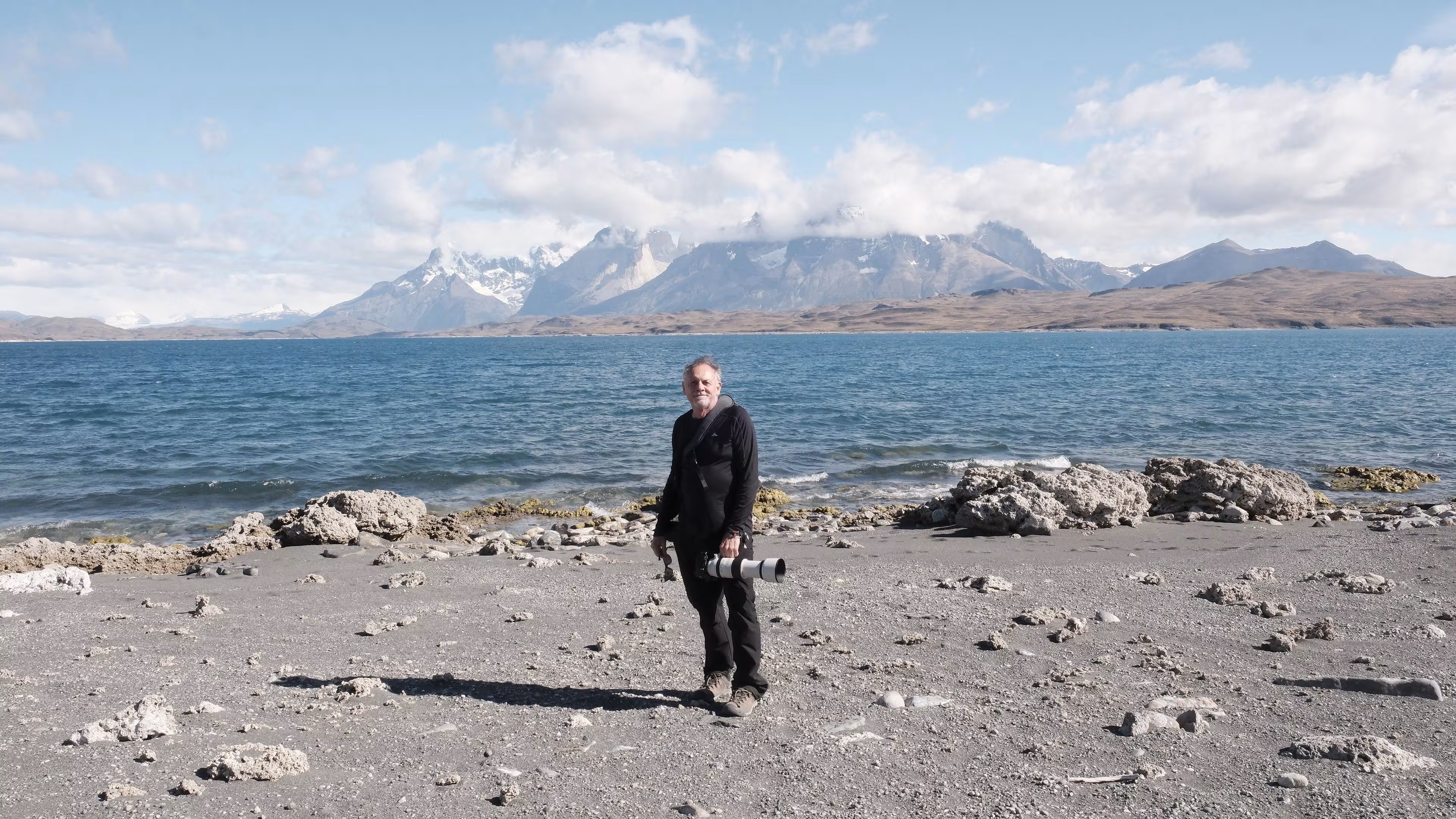
One of our Adventurers by the shore of Sarmiento Lake
This is the dimension of Torres del Paine photography that most online guides either omit or understate.
A certified local guide who works in Torres del Paine regularly is not simply a logistics support person. They are a real-time intelligence source with specific knowledge that no amount of research from abroad can substitute for.
They know which individual pumas are currently active and where their territories are positioned. They know which viewpoints are accessible and which are currently compromised by construction, crowds, or park restrictions. They know the micro-weather patterns of specific sectors, including which areas tend to clear first after a storm front passes and which locations produce the best light at which specific times of the seasonal calendar. And they have relationships with other guides in the field that create a real-time information network about wildlife movements across the park.
For puma photography specifically, the difference between going independently and going with a certified local tracker is the difference between a wildlife encounter that depends on luck and one that depends on expertise. The certified trackers listed on Chile Adventure Guides have spent years learning specific puma territories and individuals. That knowledge directly translates into positioning you at the right place at the right time with the right light.
Chile Adventure Guides connects photographers directly with certified local guides and operators across Torres del Paine. Every guide on the platform is SERNATUR-certified with verified credentials and independently reviewed by past guests. You send an inquiry, the guide responds within 24 hours, and you confirm directly. The value stays in Chile, with the local experts who have dedicated their professional lives to this specific landscape.
11. Book a Guided Photography Experience with Chile Adventure Guides
Whether you are planning a dedicated puma photography day, a full W Trek with photographic guidance, or a multi-day wildlife and landscape photography program in Torres del Paine, Chile Adventure Guides connects you directly with the local expert best suited to your goals.
Browse all Torres del Paine guided experiences
3-Day Puma Tracking Adventure: the flagship wildlife photography experience in Patagonia
Birdwatching in Patagonia Tour
Photography Tour
No payment required to inquire. Every guide responds within 24 hours.
12. FAQ: Photography in Torres del Paine
What is the best time of year to photograph Torres del Paine?
April is consistently cited by experienced photographers and local guides as the single best month. Calm conditions, intense autumn colors on the lenga beech trees, reduced crowds, manageable sunrise and sunset times, and strong light for landscape reflections all converge in April. Local guides report that April typically delivers a weather window of seven to ten consecutive clear days, which summer cannot reliably match.
What camera gear do I need for Torres del Paine?
A weather-sealed camera body is the most important single piece of equipment. Beyond that, the essential lens kit covers a wide angle for landscapes, a standard zoom for flexible landscape and environmental work, and a telephoto of 400 to 600mm for pumas, condors, and foxes. A sturdy tripod, polarizing filter, neutral density filter, multiple batteries, and a sensor cleaning kit complete the core gear list.
What focal length do I need for wildlife photography in Torres del Paine?
For pumas, condors, and foxes: 400 to 600mm. For guanacos and larger mammals at closer range: 70 to 200mm is sufficient. For environmental wildlife portraits that show the subject in the context of the Patagonian landscape: a wide angle of 17 to 35mm produces striking results when the animal allows a close approach.
Can I photograph pumas in Torres del Paine?
Yes. Torres del Paine has the highest density of wild pumas on Earth and the park's puma population is habituated to small groups of humans. The most reliable and productive approach for puma photography is a guided tour with a certified local tracker who has current knowledge of individual puma territories and movements. Sighting rates on certified guided puma tours approach near 100 percent.
Do I need a permit to photograph in Torres del Paine?
Standard park entry tickets cover personal photography. Commercial photography requires separate CONAF authorization applied for in advance. Drone operation is prohibited inside the park without official authorization regardless of purpose.
Is Torres del Paine worth visiting for photography in winter?
Yes, with preparation. Snow on the peaks creates compositions unavailable in other seasons, pumas are more active and visible with fewer visitors, and the solitude means complete control over viewpoint positioning. The practical limitations are short daylight hours, cold temperatures that affect battery life, and limited park infrastructure and accommodation.
How important is flexibility in a Torres del Paine photography itinerary?
It is the single most important planning principle. Weather in Torres del Paine changes rapidly and the best photographic opportunities are often created by conditions that cannot be predicted more than a few hours in advance. Building two to three additional days into the itinerary beyond the minimum required for planned shoots significantly increases the probability of being in the right place when the extraordinary light appears.


