

W Trek or Las Horquetas? We compare both Patagonia treks head-to-head: difficulty, cost, crowds, scenery, and logistics, so you can choose the right one for you
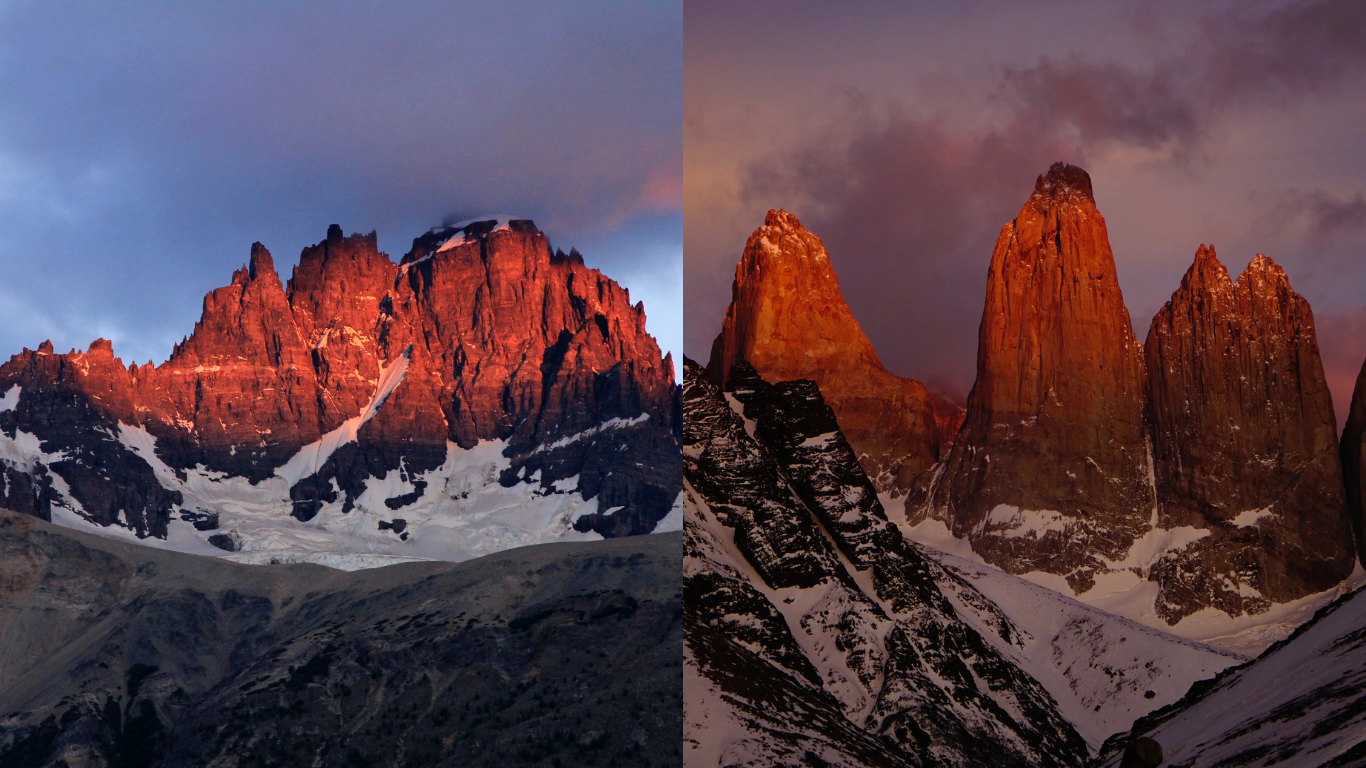
Cerro Castillo y Torres del Paine, Sunrise
There is a question that every serious trekker planning a trip to Chilean Patagonia eventually asks, and it is not the one most people expect.
It is not "W Trek or O Circuit?" That comparison gets covered endlessly. The question that separates the travelers who do their homework from everyone else is this one: W Trek or Las Horquetas?
Two multi-day treks. Two completely different regions of Chilean Patagonia. Two completely different experiences. One is the most famous hiking route in South America. The other is what experienced trekkers describe as the best trail on the continent that most people have never heard of.
At Chile Adventure Guides, our certified local guides have walked both routes dozens of times each, across every season, in every kind of Patagonian weather. This comparison is not written from a desk. It is written from the trail.
Here is everything you need to make the right decision for your trip.
1. Where These Treks Are and Why It Matters
This is the first thing most comparison articles skip, and it is actually the most important piece of context.
The W Trek is located in Torres del Paine National Park, in the Magallanes region at the southern tip of Chilean Patagonia. The nearest service hub is Puerto Natales, approximately two hours south of the park by road. Torres del Paine is Chile's most visited national park and one of the most recognizable natural landscapes in the world.
Las Horquetas is the name of both the main trailhead and the route for the Cerro Castillo National Park trek, located in the Aysén region, roughly 80 kilometers south of Coyhaique along the Carretera Austral. It is approximately 1,000 kilometers north of Torres del Paine by road. These are not neighboring parks. They are two different regions of Chilean Patagonia, separated by a significant stretch of the most remote highway on Earth.
Why does this matter for your trip planning?
Because choosing between these two treks is not just a question of scenery or difficulty. It is a question of which region of Patagonia you want to explore, how much time you have, and what kind of experience you are looking for. In many cases, the right answer is not one or the other but a question of sequencing, especially if you are traveling the Carretera Austral.
2. The W Trek at a Glance
The W Trek is the defining trekking experience of Torres del Paine and, for many travelers, the reason they came to South America in the first place. It takes its name from the W-shaped route it traces across the southern section of the park, connecting three iconic valleys with glacier views, turquoise lakes, and the granite towers that have made this park famous worldwide.
Distance: Approximately 74 km (46 miles) Duration: 4 to 5 days Elevation gain: Approximately 2,800 to 3,000 meters total Difficulty: Moderate Direction: Can be hiked east to west or west to east Start and end points: Las Torres sector or Paine Grande refuge, depending on direction
The three arms of the W: The eastern arm leads to Mirador Las Torres, the iconic base-of-the-towers viewpoint that most people associate with Torres del Paine. The central arm climbs into Valle del Francés, a hanging valley flanked by the Los Cuernos massif with dramatic views of avalanche-prone glaciers above. The western arm follows the shore of Lago Grey to the face of Glacier Grey, one of the most accessible glaciers in Chilean Patagonia.
The W Trek is fully served by a network of refugios (mountain lodges) and campgrounds managed by two private operators. Meals, beds, hot showers, and equipment rental are all available along the route. You can complete the entire trek without carrying a tent or cooking a single meal if you choose.
3. Las Horquetas Trek at a Glance
The Las Horquetas trek through Cerro Castillo National Park is a point-to-point route that begins at the Las Horquetas trailhead, approximately 30 kilometers from Villa Cerro Castillo along the Carretera Austral, and ends in Villa Cerro Castillo itself on the western side.
The park takes its name from Cerro Castillo, a dramatic basalt peak at 2,675 meters whose jagged, castle-like spires are entirely unlike anything in Torres del Paine. Where Torres del Paine is built around granite, Cerro Castillo is basalt. The geology is different, the ecosystems are different, and the feeling on the trail is entirely different.
Distance: Approximately 50 to 54 km (31 to 34 miles) on the classic route Duration: 3 to 4 days Elevation gain: Significant, with two major passes including Morro Negro at 1,700 meters Difficulty: Moderate to strenuous Direction: Most commonly hiked east to west, starting at Las Horquetas Start and end points: Las Horquetas trailhead to Villa Cerro Castillo
The highlights of the route: Day one follows the Rio Turbio valley through native forest and open grassland, with river crossings that require waterproof boots and good footwork. Day two involves the climb toward El Peñón pass with the first views of the hanging Glacier Peñón. Day three reaches the centerpiece of the entire trek: Laguna Cerro Castillo, an extraordinary turquoise lake set directly below the basalt spires of the peak itself. Day four, if taken at a leisurely pace, crosses Morro Negro Pass with panoramic views toward Argentina before the descent to Villa Cerro Castillo.
Infrastructure is basic and entirely CONAF-managed. There are four designated campsites with pit toilets and water access. There are no refugios, no restaurants, no equipment rental, and no hot showers. You carry everything you need for the duration of the trek.
4. Scenery and Highlights: What You Actually See
This is where most trekkers make their comparison, and it deserves an honest assessment rather than promotional language.
W Trek scenery is extraordinary and iconic for a reason. Mirador Las Torres at sunrise, when the orange and pink light hits the granite spires above a black glacial lake, is one of the genuinely transcendent moments in world trekking. Glacier Grey is vast and deeply blue, visible across an open lake before you reach its face. Valle del Francés frames the Los Cuernos peaks in a way that photography consistently fails to capture accurately. The scale of Torres del Paine, the combination of granite, glacial lake, steppe, and Southern beech forest in a single view, is unlike anywhere else.
Las Horquetas scenery is wilder, rawer, and less immediately recognizable, but it rewards the traveler who slows down. The native lenga beech forest on the lower trail is dense and ancient in a way that Torres del Paine's more open landscape does not offer. The river crossings on day one create a sense of genuine wilderness immersion that the W Trek's maintained boardwalks and signed junctions do not replicate. And Laguna Cerro Castillo itself, a cobalt-blue lake sitting directly below the basalt towers with a residual glacier feeding it from above, is a scene that consistently stops trekkers in their tracks, many of whom call it the finest single viewpoint of their entire Patagonia trip.
The honest assessment from our guides: Torres del Paine wins on name recognition and sheer variety of iconic landmarks per kilometer. Cerro Castillo wins on intimacy, wildness, and the feeling that you earned the views rather than sharing them with a crowd.
5. Difficulty and Fitness Requirements
Both treks are classified as moderate and are accessible to fit hikers without technical mountaineering skills. But moderate covers a wide range of experiences, and the character of the difficulty is different on each route.
W Trek difficulty is primarily cumulative. Daily distances are significant, with some days covering 20 or more kilometers with meaningful elevation changes. The terrain is well-maintained and clearly marked throughout. The most demanding section is the ascent to Mirador Las Torres on the final or first day, depending on direction, which involves steep rocky terrain and boulder scrambling at altitude. The western section along Lago Grey is exposed to Patagonian wind in a way that can be genuinely challenging on bad days. River crossings are minimal and almost entirely managed by permanent bridges.
Las Horquetas difficulty is more technical in specific sections. The river crossings on day one require careful footwork in cold water and can be thigh-deep in high water conditions, typically during snowmelt in early season. The pass crossings are steeper and less maintained than anything on the W Trek, with sections of loose rock and, in early season, snow travel. The trail is less well-marked in certain sections, and the terrain is more remote, meaning the consequences of a misstep in navigation or weather are more significant. For hikers without previous multi-day backpacking experience, Las Horquetas warrants more preparation and ideally a local guide.
If you are a first-time multi-day trekker in Patagonia, the W Trek is the more appropriate starting point. If you have previous experience with backcountry hiking and river crossings, Las Horquetas is well within reach and will give you a more demanding and ultimately more rewarding experience.
6. Crowds: The Honest Reality
This is the dimension where the two treks diverge most dramatically, and it is increasingly the deciding factor for experienced travelers.
The W Trek in high season (December through February) is genuinely crowded by any international wilderness standard. The trail between Las Torres and the French Valley sees hundreds of hikers per day. Campsites fill to capacity. Refugios must be booked six to twelve months in advance to secure a bed or even a tent platform during peak dates. The viewpoint at Mirador Las Torres at sunrise can have dozens of people present simultaneously. This does not diminish the landscape, but it fundamentally changes the experience from solitude-in-wilderness to shared-spectacle-in-wilderness. Both have value, but they are different experiences.
Las Horquetas in high season feels like a different planet. The Aysén region as a whole receives a fraction of the visitors that Torres del Paine does. Encountering more than a handful of other groups across a four-day trek is unusual. In shoulder season, spending entire days on the trail without seeing another hiker is entirely possible. The campgrounds have designated spots and basic facilities, but they do not have the queues, the noise, or the social density of a Torres del Paine campground in January.
If solitude and genuine wilderness immersion are priorities, Las Horquetas wins this comparison without contest. If you are comfortable sharing one of the world's great natural landscapes with other travelers who feel equally fortunate to be there, the W Trek delivers an experience that the crowds, in some ways, enhance through the shared energy of a great collective adventure.
7. Cost Comparison: What Each Trek Really Costs
W Trek costs (2025/2026 season, per person):
Park entrance fee: USD 35 to 48 depending on duration and nationality
Accommodation options vary significantly:
Tent platform: USD 30 to 50 per night
Refugio bunk with full board: USD 200+ per night
Full 5-day W Trek, budget camping approach, shared tent: approximately USD 300 to 450 all-in excluding transport
Full 5-day W Trek, refugio with meals: approximately USD 700 to 1,000 per person, excluding transport
Transportation from Puerto Natales to the park and internal transfers add USD 30 to 80 depending on routing.
Las Horquetas costs (2025/2026 season, per person):
Park entrance fee: Included in the CONAF entry fee, significantly lower than Torres del Paine
Accommodation: Designated campsites are free with the entry fee. There are no refugios, so camping is the only option.
Food: You carry everything. Budget accordingly for 3 to 4 days of self-sufficient meals.
Transportation from Coyhaique to Las Horquetas by bus: approximately USD 6 to 8 one way
Total cost for Las Horquetas excluding gear and transport to Coyhaique: approximately USD 15 to 30 per person for the trek itself
The cost difference between these two treks is not marginal. For budget-conscious travelers willing to carry their own gear and food, Las Horquetas offers a world-class trekking experience at a fraction of the cost of the W Trek.
8. Logistics: Booking, Planning, and Getting There
W Trek logistics require significant advance planning. Campsite and refugio reservations open in April for the following high season and popular January and February dates sell out within days of opening. Booking a bed at a refugio for New Year's week requires planning a year in advance. Park entry tickets must be purchased online in advance at pasesparques.cl. The trek itself is well-signed and managed with ranger checkpoints, so independent navigation is straightforward once you are in the park.
Las Horquetas logistics are considerably more relaxed. Unlike Torres del Paine, there is no advance booking system for the designated campsites. You pay the CONAF entry fee at the Las Horquetas entrance, which is open from 7:00 AM to 1:00 PM to ensure hikers reach the first campsite before dark. The trek can, in principle, be organized at the last minute. There is no online reservation system to navigate. A bus runs from Coyhaique to Las Horquetas every morning at approximately 8:00 AM, and the same bus returns from Villa Cerro Castillo, making independent logistics relatively simple.
The practical implication: if you are in Patagonia in January and did not book the W Trek six months ago, you may find yourself locked out of your preferred dates or forced into expensive last-minute options. If you are flexible and want to experience world-class Patagonian trekking without the planning infrastructure of a major expedition, Las Horquetas offers genuine flexibility.
9. Infrastructure on the Trail
W Trek infrastructure is the most developed of any multi-day trek in Chilean Patagonia. Refugios offer heated common areas, hot showers, good quality meals, and equipment rental. Campgrounds have platforms, cooking shelters, and in most cases hot shower access for campers. Wi-Fi is available at some refugios. There are CONAF ranger stations at multiple points along the route. The trail itself is maintained, signed, and in some sections boardwalked to protect sensitive terrain.
Las Horquetas infrastructure is basic by design. Four designated campsites, each with a pit toilet and water access from nearby rivers or streams. No cooking shelters, no hot showers, no equipment rental, no meals available, and no Wi-Fi. CONAF rangers are present at the park entrance and intermittently along the route, but you should not count on assistance if you run into trouble mid-trail. Carrying a comprehensive first aid kit, navigation tools, and enough food and fuel for the entire duration is not optional.
This infrastructure gap is the primary reason we recommend first-time multi-day trekkers in Patagonia start with the W Trek. The safety net on the W Trek is real and significant. The wilderness on Las Horquetas is real and significant for the same reason.
10. Best Time of Year for Each Trek
W Trek best season: November through April covers the full operational season. October and March through mid-April represent the sweet spots for experienced travelers: manageable weather, fewer crowds than January, full daylight, and all infrastructure operational. December, January, and February offer the most stable weather but the highest crowds and wind. May closes most refugios and marks the end of the viable trekking season.
Las Horquetas best season: December through March is the recommended window. Before December, snow is frequently present on the passes and river crossings can be high and dangerous. Early season hikers (October, November) need solid experience and good judgment. March and April offer excellent conditions with reduced insect activity, better light for photography, and virtually no other hikers. The lenga beech forest turns gold and red in April, making the forest sections of the lower trail exceptionally beautiful in autumn.
One important note for Las Horquetas in summer: horseflies, known as tabanos in Chilean Spanish, can be intense in December and January in the lower valley sections. Insect repellent is essential.
11. Wildlife on Each Route
W Trek wildlife includes the full diversity of Torres del Paine's remarkable ecosystem. Guanaco herds are common across the steppe sections of the park, the east section. Andean condors are regularly spotted on thermals above the valley walls. Pumas are present in the park and are occasionally spotted by trekkers on the main trail of Base Torres, though dedicated puma tracking tours significantly improve the odds.
Las Horquetas wildlife is different in character but equally remarkable. The Aysén region is home to the huemul, the endangered South Andean deer and Chile's national animal, which is encountered more frequently on the Cerro Castillo trek than almost anywhere else in Patagonia. The native lenga beech forest supports a different bird community than Torres del Paine's open steppe, including the Magellanic woodpecker and various endemic species. The rivers hold southern river otters. The overall wildlife density is lower than Torres del Paine but the encounters feel more surprising and intimate because the landscape itself is less visited.
12. Going with a Guide vs. Going Independent
On the W Trek, independent hiking is entirely feasible, and the majority of trekkers complete the route without a guide. The trail infrastructure, signage, and density of other hikers create a safety net that makes independent navigation low-risk for experienced trekkers. A private guide adds deep ecological and geological knowledge, logistical support, and the ability to move efficiently without losing time to navigation or campsite organization. For photographers and wildlife enthusiasts, a local guide dramatically improves the quality and depth of the experience.
On Las Horquetas, the case for a local guide is stronger. The trail is less consistently marked, the river crossings require judgment that is difficult to acquire from a guidebook, the passes carry genuine weather exposure, and the remoteness means that a navigation error or injury has more serious consequences. Beyond safety, a certified local guide with deep knowledge of the Cerro Castillo ecosystem, its geology, its flora, and its wildlife adds a dimension to the Las Horquetas experience that transforms a physically demanding hike into an education in Chilean Patagonian wilderness.
Chile Adventure Guides lists certified local guides for both routes. Every guide on our platform is SERNATUR-certified, independently reviewed, and our operations team responds within 24 hours. No foreign agency markup, no generic itineraries, no guides who learned this terrain from a map.
13. Head-to-Head Comparison Table
Feature | W Trek | Las Horquetas |
|---|---|---|
Location | Torres del Paine, Magallanes | Cerro Castillo NP, Aysén |
Distance | ~74 km | ~50 to 54 km |
Duration | 4 to 5 days | 3 to 4 days |
Difficulty | Moderate | Moderate to Strenuous |
Crowds | High in season | Very low year-round |
Infrastructure | Full refugios and campgrounds | Basic camping only |
Cost (budget) | USD 300 to 450 per person | USD 15 to 30 per person |
Advance booking | Required, months in advance | Not required |
River crossings | Minimal, mostly bridged | Multiple, some knee-deep |
Guide recommended | Recommended if looking for an enhanced experience. | Strongly recommended |
Key highlight | Mirador Las Torres, Glacier Grey | Laguna Cerro Castillo, Cerro Castillo spires |
Wildlife | Pumas, guanacos, condors | Huemul deer, woodpeckers, otters |
Best for | First-timers, comfort-seekers, iconic experiences | Experienced hikers, solitude, off-beaten-path |
Park entry | ~USD 35 to 48 | Included in low entry fee |
14. Which Trek Should You Choose?
Choose the W Trek if:
You are doing your first multi-day trek in Patagonia and want the security of trail infrastructure and other hikers around you. You want to see the landscapes that define Patagonia in the global imagination. You are comfortable with advance planning and booking logistics. You want the option to sleep in a bed and eat a hot meal at the end of each day. You are traveling with a mixed group that includes less experienced hikers. The iconic views of Las Torres, Valle del Francés, and Glacier Grey are specifically on your list.
Choose Las Horquetas if:
You have completed at least one previous multi-day backpacking trip and are comfortable with self-sufficient wilderness travel. You are specifically looking for solitude and the feeling of genuine Patagonian wilderness without the managed-experience quality of a heavily trafficked route. You are traveling the Carretera Austral and Coyhaique is already on your itinerary. You are on a budget and want world-class trekking at a fraction of the W Trek cost. You want to see the huemul in its natural habitat and experience a forest ecosystem rather than open steppe. You are the kind of traveler who prefers the trail less taken.
Do both if:
You have 10 or more days in Chilean Patagonia and the budget to support both. This is the recommendation our guides give most frequently to travelers who ask. The two treks complement each other precisely because they are so different. Las Horquetas first, traveling south along the Carretera Austral, followed by Torres del Paine at the end of the trip, gives you the full spectrum of what Chilean Patagonia offers: wild and intimate first, iconic and grand last.
15. Book Your Guided Trek with Chile Adventure Guides
Chile Adventure Guides is the platform that connects you directly with the certified local guides and operators who lead these treks. Not a travel agency. Not a foreign operator. Local experts who have walked these trails for years and know the terrain, the weather, and the wildlife better than anyone.
Every guide listed is SERNATUR-certified with verified credentials and independently reviewed by past guests. You send an inquiry, the guide responds within 24 hours, and you confirm directly.
Browse Las Horquetas Guided Trek Options
No payment required to inquire. Direct contact with from the first message.


